EU Expands Harmonised Standards for MDR: Focus on Medical Gloves, Sterilisation, and Patient Transport Equipment
The European Commission has taken a significant step in strengthening the regulatory framework for medical devices by harmonising additional standards under the Medical Device Regulation (MDR, EU 2017/745). The latest update, formalised through Commission Implementing Decision (EU) 2025/681, introduces new harmonised standards covering medical gloves for single use, sterilisation of medical devices, and patient handling equipment in ambulances.
MedNet EC-REP
Author

Key Highlights of the New Harmonised Standards
1. Medical Gloves for Single Use
The revised standards for medical gloves address both the requirements for freedom from holes and the physical properties of gloves. The new harmonised standards are:
- EN 455-1:2020+A2:2024: Specifies requirements and testing for freedom from holes.
- EN 455-2:2024: Details requirements and testing for physical properties of single-use medical gloves.
These updates ensure higher safety and performance levels for gloves used in healthcare, directly supporting infection control and patient safety.
2. Sterilisation of Medical Devices
Sterilisation remains a cornerstone of medical device safety. The new harmonised standards are:
- EN 556-1:2024: Sets requirements for terminally sterilised medical devices to be designated as "STERILE".
- EN 556-2:2024: Covers requirements for aseptically processed medical devices.
These standards support manufacturers in demonstrating compliance with sterility requirements, a critical aspect of MDR conformity assessment.
3. Patient Handling Equipment in Ambulances
The safe and effective transport of patients is vital in emergency medical services. The updated standards include:
- EN 1865-2:2024: Focuses on power-assisted stretchers used in ambulances.
- EN 1865-6:2024: Introduces requirements for powered chairs used in ambulances.
These standards address both the technical and safety requirements for patient transport equipment, ensuring interoperability, safety, and ergonomic design across EU member states.
The Impact of Harmonised Standards
Harmonised standards provide manufacturers and other stakeholders with a clear pathway to demonstrate conformity with essential requirements under the MDR. By aligning with these standards, manufacturers benefit from a “presumption of conformity,” streamlining market access and enhancing patient safety across the EU.
The process of harmonisation is overseen by European Standards Organizations (CEN, CENELEC, and ETSI) in response to requests from the European Commission. The latest standards reflect the latest technical and scientific advancements, ensuring that EU regulations remain robust and fit for purpose.
For further details, the full text of Commission Implementing Decision (EU) 2025/681 can be found on the EUR-Lex website.
Related Articles
IVDR Rule 7: When Is IVD Control Material Class B? (MDCG 2020-16 Rev. 5)
MDCG 2020-16 Rev. 5 clarifies when IVD control material without an assigned value falls under class B, and when another rule applies.
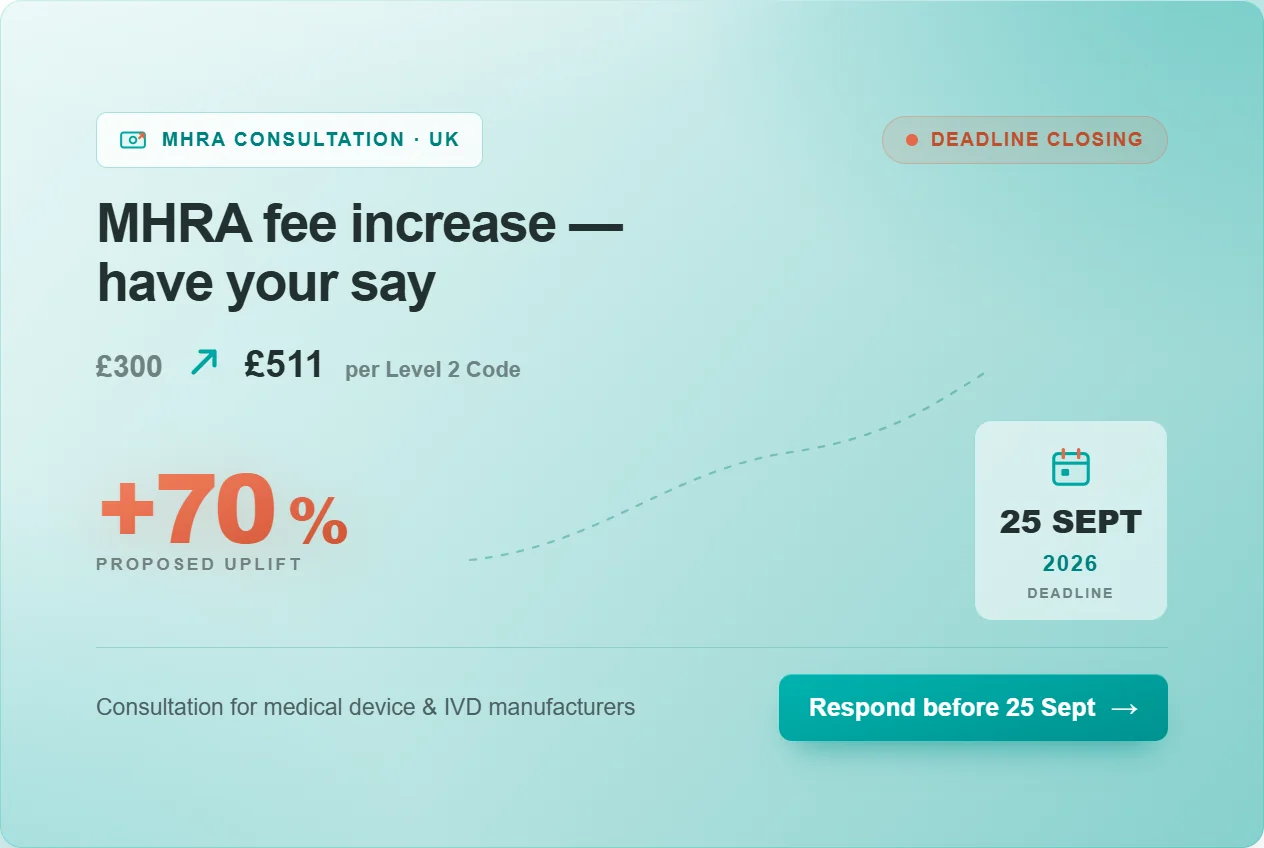
MHRA Consultation 2026: The Fee Increases Coming for Medical Device Manufacturers in 2027
The MHRA has opened a consultation on fee increases from April 2027 — including a proposed 70 % rise in the post-market surveillance fee. Manufacturers have until 25 September to respond.

New EU Study: Where Manufacturers and Authorised Representatives Really Stand on MDR and IVDR
New EU study finds 48% of manufacturers have withdrawn devices from the market. Key MDR/IVDR and AR findings for 2026. Read the numbers now.
Stay Updated
Get the latest regulatory updates and industry insights delivered to your inbox.
Subscribe to Updates