Understanding the Interplay: MDR, IVDR, and the AI Act – Key Insights from MDCG 2025-6
The regulatory landscape for medical devices and in vitro diagnostic medical devices is continuously evolving, with the introduction of new technologies like Artificial Intelligence (AI) adding layers of complexity.
MedNet EC-REP
Author
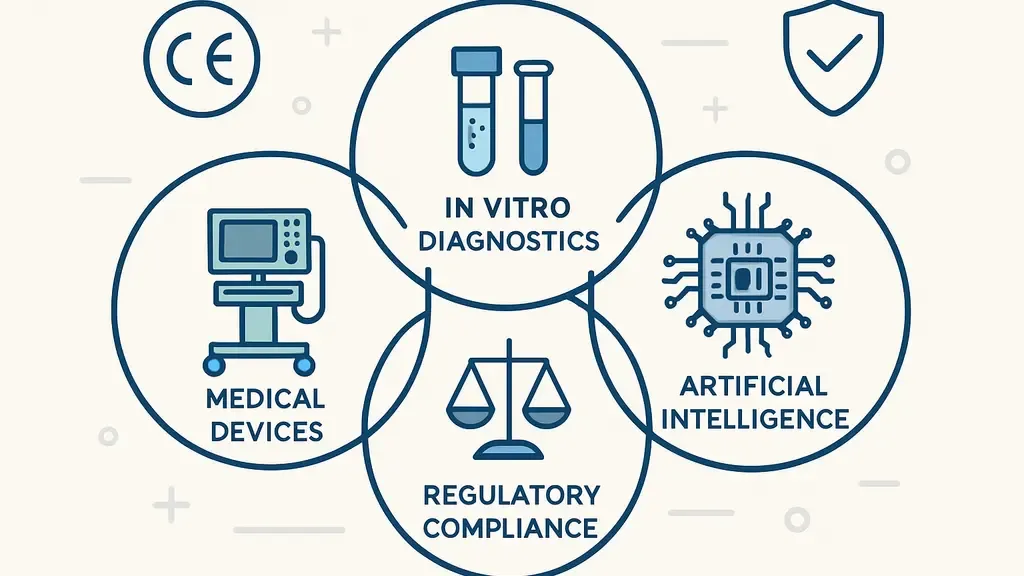
Recently, the MDCG, in conjunction with the Joint Artificial Intelligence Board (AIB), released the MDCG 2025-6 FAQ document, offering essential clarifications on the interplay between the Medical Devices Regulation (MDR), the In Vitro Diagnostic Medical Devices Regulation (IVDR), and the Artificial Intelligence Act (AIA). This article provides a concise overview of the key takeaways from this significant guidance, tailored for professionals in the medical device industry.
Scope of Application and Classification
One of the primary areas addressed by MDCG 2025-6 is the scope of application of the AIA to medical device software (MDSW) and the classification of Medical Device Artificial Intelligence (MDAI). The document clarifies that MDSW, as defined by MDCG 2019-11, falls under the AIA if it meets the definition of an AI system.
Crucially, an MDAI is considered a high-risk AI system under Article 6(1) of the AIA if it is a safety component or a medical device itself, AND it is subject to third-party conformity assessment by a notified body under the MDR/IVDR. It's important to note that the classification of an AI system as high-risk under the AIA does not automatically elevate the risk classification of the medical device under the MDR/IVDR. Instead, the MDR/IVDR classification dictates whether the AI system qualifies as high-risk under the AIA, thereby influencing the regulatory scrutiny required. The document includes a helpful table outlining this interplay for various MDR/IVDR classifications.
Key Requirements and Management Systems
The MDCG 2025-6 document emphasizes the complementary nature of the MDR/IVDR and AIA regarding key requirements, particularly in the realm of management systems. Both regulations necessitate robust lifecycle management for MDAI, ensuring continued safety and performance. The AIA reinforces this by requiring continuous review, oversight, and consistent performance of high-risk MDAI throughout its lifecycle, including proportionate post-market monitoring. This involves iterative risk management processes, regular systematic review, and updating based on performance data.
Regarding quality management systems (QMS), the AIA and MDR/IVDR jointly underscore their importance for MDAI safety and performance. While MDR/IVDR mandates a QMS for overall device compliance, the AIA specifically targets AI systems, covering substantive requirements and procedural obligations across at least thirteen aspects. To avoid duplication, manufacturers are encouraged to integrate AIA-specific QMS elements into their existing MDR/IVDR QMS. This includes incorporating additional requirements such as data and data governance, record-keeping, transparency, and human oversight. The document also highlights ongoing efforts to develop harmonized European and international standards for QMS in high-risk MDAI to support consistent implementation.
Reference
MDCG 2025-6 - FAQ on Interplay between the Medical Devices Regulation & In vitro Diagnostic Medical Devices Regulation and the Artificial Intelligence Act (June 2025). Source: mdcg_2025-6_en.pdf
Related Articles
IVDR Rule 7: When Is IVD Control Material Class B? (MDCG 2020-16 Rev. 5)
MDCG 2020-16 Rev. 5 clarifies when IVD control material without an assigned value falls under class B, and when another rule applies.
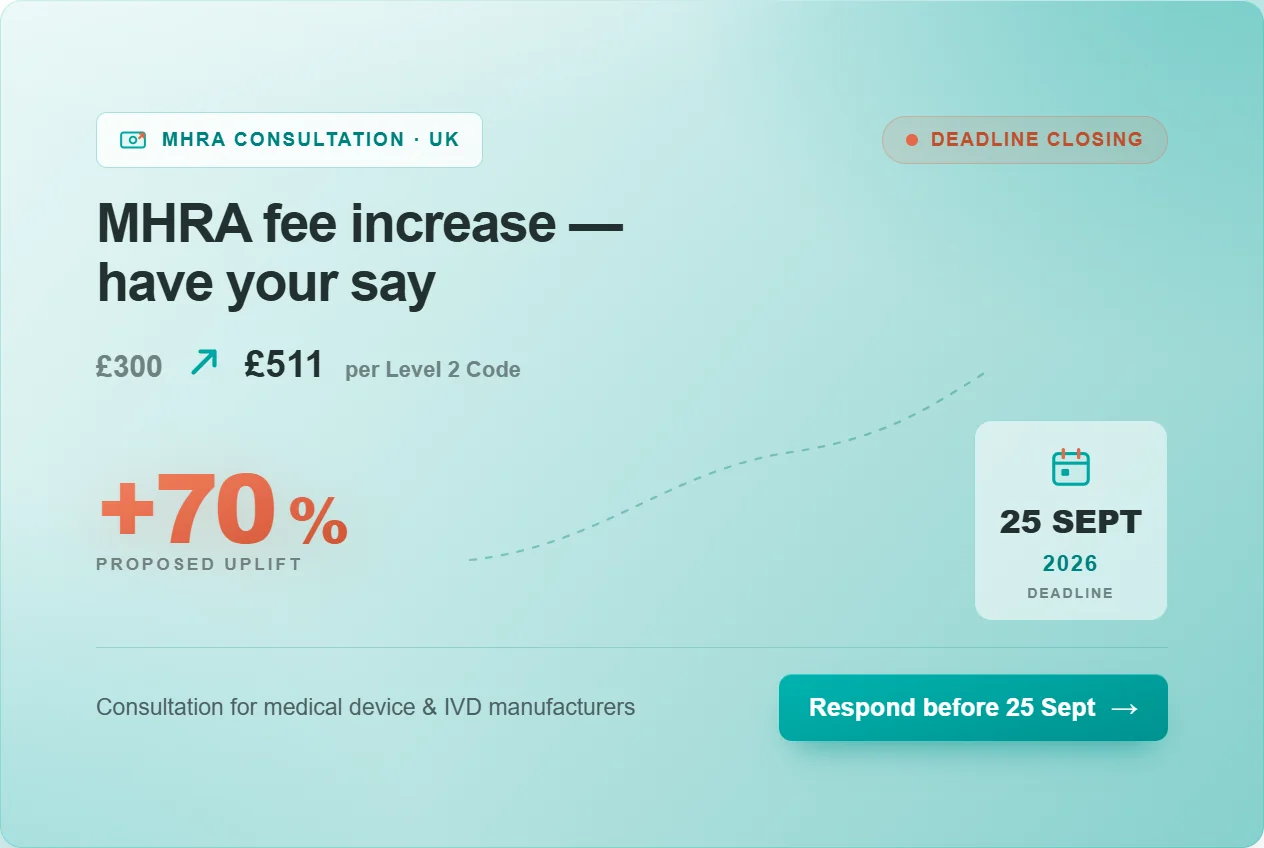
MHRA Consultation 2026: The Fee Increases Coming for Medical Device Manufacturers in 2027
The MHRA has opened a consultation on fee increases from April 2027 — including a proposed 70 % rise in the post-market surveillance fee. Manufacturers have until 25 September to respond.

New EU Study: Where Manufacturers and Authorised Representatives Really Stand on MDR and IVDR
New EU study finds 48% of manufacturers have withdrawn devices from the market. Key MDR/IVDR and AR findings for 2026. Read the numbers now.
Stay Updated
Get the latest regulatory updates and industry insights delivered to your inbox.
Subscribe to Updates